Mantente al día con nosotros


Health Insurance Plans in Florida 2027 | Prices by county


Contact us with your questions and we will help you within minutes.
Professional health insurance advice in Florida
Health insurance plans in Florida is purchased through the intervention of HealthCare.gov, the federal Health Insurance Marketplace, and its price changes from one county to the next. The same 40-year-old person with an annual income of $31,920 pays $141.02 a month for the lowest-cost Silver plan in Jacksonville and $180.25 in Miami and the hospital included in the network also changes with the insurer you choose.
There are a lot of changes coming our way. The 2027 plan year calls for a fresh review of every decision. Cigna, Molina and Sunshine State Health Plan are leaving the Florida market, full premiums rise 10.4% on average and as much as 25% at only one insurer, any excess premium tax credit must now be repaid in full and many lawfully present immigrants who are not permanent residents lose their subsidy. Two hospital network disputes also land on January 1: UnitedHealthcare terminated its contract with AdventHealth, and Memorial Healthcare System has been out of Florida Blue’s network since September 2025. At TuSeguroMedico.com we compare the 2027 plans in your county at their real prices, confirm whether you qualify for the premium tax credit and verify that your doctor, your hospital and your medications are covered before we enroll you. Our advice costs you nothing. TuSeguroMedico.com is owned by Panel Development Partners Agency, a Florida-licensed insurance agency.
Insurers, prices and subsidies for health insurance in Florida in 2027
Good health insurance is neither the cheapest nor the most expensive plan in existence. It is the plan that includes your doctor and your hospital, covers your specific medications and costs you the least over the full year. A good plan in Florida meets four conditions:
- Its network includes the hospital and the doctors you use in your county.
- Its formulary covers your medications at a reasonable cost tier.
- Its total cost for the year, which adds the monthly premium to what you pay when you use the plan, is the lowest for the way you use your insurance.
- It captures the full premium tax credit and cost-sharing reductions you are entitled to.
A medical network you actually use
A provider network is the group of doctors, clinics and hospitals that have contracted negotiated rates with an insurance company. Most Florida Marketplace plans are HMOs, meaning out-of-network care is covered only in true medical emergencies. Even within the same insurer, network structures can differ substantially. For instance, Florida Blue issues Marketplace coverage through two corporate entities, Blue Cross and Blue Shield of Florida and its HMO affiliate Health Options, with its myBlue plans relying on a noticeably narrower network than its BlueOptions or BlueSelect products. Similarly, Ambetter, AvMed and Oscar develop their own distinct regional networks, including Oscar plans in Orlando and Tampa branded «with AdventHealth» because they are built directly around that health system.
Four facts verified in the lists the hospitals themselves publish show the risk of choosing on price alone:
- Baptist Hospital of Miami lists only AvMed Entrust, Florida Blue and Oscar among the Marketplace plans it accepts for 2027. Ambetter, UnitedHealthcare, Wellpoint and AmeriHealth Caritas do not appear on that list.
- Memorial Healthcare System in Broward County has been out of Florida Blue’s network since September 1, 2025, for every Florida Blue plan, including Marketplace plans.
- UnitedHealthcare terminated its contract with AdventHealth. The agreement ends on December 31, 2026, and without a new one every AdventHealth hospital and clinician in Florida leaves UnitedHealthcare’s network on January 1, 2027.
- Jackson Health System in Miami-Dade County accepts the widest range of Marketplace plans of any hospital we reviewed, including Ambetter, AvMed, Florida Blue, Oscar, UnitedHealthcare, Wellpoint and AmeriHealth Caritas.
Before you enroll, confirm the full name of the 2027 plan with your doctor’s office and with the hospital’s billing department, because the insurer’s name alone does not decide your access.
Coverage that fits your medications
Every health plan has a formulary, which is the list of medications it covers and the cost tier assigned to each drug. Two plans with the exact same monthly premium can charge drastically different amounts for the very same prescription, making the formulary just as critical as the premium when selecting coverage. In Florida, Oscar offers plans tailored to specific chronic conditions, reflected directly in plan names like Bronze Simple Breathe Easy with Enhanced COPD Benefits, the lowest-cost Bronze option in Orlando and Tampa, and Gold Simple Diabetes in Miami. If your 2026 coverage was through Cigna, Molina, or Sunshine State Health Plan, be sure to confirm that your new plan covers every one of your medications before the December 15, 2026 enrollment deadline.
Demographic and health context in Florida
Florida is home to 23.4 million residents, with 29.2% identifying as Hispanic or Latino according to 2025 estimates from the U.S. Census Bureau. One in five Floridians was born outside the United States, median household income stands at $74,568, and 13.6% of residents under 65 remain uninsured. The state also leads the nation in Marketplace participation, reaching 4,538,772 plan selections for 2026. The Hispanic community is heavily concentrated in the five counties where we analyzed 2027 pricing:
- Miami-Dade County has 2.80 million residents. 70.6% are Hispanic, 75.3% speak a language other than English at home, and 15.3% of residents under 65 have no health insurance, the highest share of the five.
- Broward County has 2.01 million residents, 35.0% of them Hispanic, and 13.8% of residents under 65 have no health insurance.
- Orange County, which includes Orlando, has 1.53 million residents, 35.4% of them Hispanic, and 13.5% of residents under 65 have no health insurance.
- Hillsborough County, which includes Tampa, has 1.57 million residents, 32.1% of them Hispanic, and 13.1% of residents under 65 have no health insurance.
- Duval County, which includes Jacksonville, has 1.06 million residents, 14.5% of them Hispanic, and 11.9% of residents under 65 have no health insurance.
Two fundamental realities explain those high uninsured numbers. Because Florida never expanded Medicaid, non-disabled adults without dependent children who earn below the federal poverty line fall into a coverage gap, qualifying neither for Medicaid nor for federal premium tax credits. At the same time, standard insurance terms like deductible, coinsurance, formulary, and out-of-pocket maximum can be completely unfamiliar to newcomers arriving from different healthcare systems. Our role is to explain every detail in clear, everyday language, whether in English or Spanish, and to walk through the actual numbers with you so you know exactly what financial assistance and coverage you qualify for.
How to identify the best health insurance for you in Florida
There is no single best health insurance plan in Florida, because the answer depends on your county, your income and the hospital where you receive care. There is a best plan for each situation and you find it in five steps:
- Define your healthcare landscape. Write down your county, your preferred hospital facility and the primary care doctors or specialists you intend to keep.
- Identify your non-negotiables. List every daily prescription medication, essential specialist visits and any ongoing treatment plan that cannot be interrupted.
- Evaluate the four core plan metrics. Review network participation, prescription drug formulary, maximum out-of-pocket exposure and net monthly premium, in that exact order of priority.
- Factor in available financial assistance. Calculate your advance premium tax credit and if your household income falls at or below 250% of the federal poverty level, prioritize Silver tier plans to capture Cost-Sharing Reductions.
- Re-evaluate during every Open Enrollment. Provider networks, formularies, monthly rates and subsidy benchmarks update each plan year, making annual plan comparisons essential.
With 2027 prices and hospital lists in hand, the result of those steps is specific:
- If your income is between 100% and 250% of the federal poverty level, the best plan is a Silver plan with cost-sharing reductions: Florida Blue’s myBlue Essentials Silver in Miami-Dade and Broward, Ambetter’s Thrive Silver in Orlando and Tampa, and Ambetter’s Clarity Silver in Jacksonville.
- If you receive care at Baptist Health in Miami-Dade County, choose AvMed Entrust, Florida Blue or Oscar, the three Marketplace insurers on Baptist’s list for 2027.
- If you receive care at Memorial Healthcare System or Broward Health in Broward County, do not choose a Florida Blue plan. Both systems are out of that insurer’s network.
- If you receive care at AdventHealth in Orlando or Tampa, do not choose a UnitedHealthcare plan until the two sides sign a new contract.
- If you are healthy and want protection only against a major event, the lowest-cost Bronze plan in your county has the lowest premium and lets you contribute to a health savings account.
Mistakes that cost you thousands of dollars
- The first mistake is choosing on premium cost alone: in Miami, the $0-a-month Bronze plan carries an $12,000 deductible.
- The second is assuming your hospital is in the network, when Baptist Health lists only three Marketplace insurers, Memorial is out of Florida Blue’s network and AdventHealth may leave UnitedHealthcare’s network on January 1.
- The third is letting a Cigna, Molina or Sunshine State Health Plan policy renew automatically, when all three leave the Florida Marketplace on December 31, 2026.
- The fourth mistake is underestimating your income and failing to update it during the year, because any excess premium tax credit is repaid in full and crossing the $63,840 limit for a single person without planning for it costs a 60-year-old in Miami $12,348 in a single year.
- The fifth is ignoring a document request from the Marketplace: you have 90 days to send proof and anyone who does not respond in time loses the premium tax credit or the plan. If the deadline has already passed, send the documents anyway.
- The sixth mistake is enrolling your children in a private plan when they qualify for Florida KidCare, because they pay the full premium with no tax credit. The seventh is taking the lowest Gold premium as the better deal: in Miami the lowest-cost Gold plan costs less each month than the lowest-cost Silver plan and in a year with a hospital stay it costs more than twice as much.
Health insurance options available in Florida
In Florida, Health Insurance Marketplace plans are purchased through HealthCare.gov, the federal Marketplace, because Florida does not run its own exchange. You enroll on HealthCare.gov, with a certified agent, with a certified web broker or on the insurer’s website and your eligibility and your cost are the same through any of these channels. These are the only plans that cover pre-existing conditions and the ten essential health benefits and that receive the premium tax credit.
Obamacare plans
Plans are divided into metal levels according to the share of medical costs the insurer pays:
- Bronze: the lowest premium and the highest deductible. It suits a healthy person who wants protection against a major event.
- Silver: the only level with cost-sharing reductions. It suits anyone earning up to 250% of the federal poverty level.
- Gold: a higher premium and a lower deductible, although in some Florida counties the lowest-cost Gold plan carries a higher deductible than the lowest-cost Silver plan.
- Platinum: sold in some counties. In Miami-Dade County, 8 of the 160 plans are Platinum.
- Catastrophic: for people under 30 and for anyone with a hardship exemption. It has the highest deductible and receives no premium tax credit.
Obamacare subsidies available
The premium tax credit lowers the monthly premium of Marketplace plans. It goes to households with incomes between 100% and 400% of the federal poverty level that do not have access to affordable coverage through an employer. Under the 2026 guidelines, which apply to 2027 plans, that range runs from $15,960 to $63,840 for one person and from $33,000 to $132,000 for a family of four. Four rules apply in 2027 and you need to know them before you enroll:
- The 400% limit is absolute. Earning one dollar above that limit eliminates the entire premium tax credit. Further down, in the advice by situation, we show what that means for a 60-year-old in Miami.
- Any excess tax credit is repaid in full. According to the IRS, the repayment cap no longer exists for tax years after 2025. If your actual income exceeds your estimate, you must repay the entire difference on your tax return.
- Cost-sharing reductions exist only at the Silver level. People who receive the premium tax credit and earn up to 250% of the federal poverty level pay a much lower deductible and out-of-pocket maximum. The Florida Blue plan that has a $1,400 deductible in Miami with this help has an $11,925 deductible without it.
- Immigration status decides eligibility starting January 1, 2027. Among non-citizens, only lawful permanent residents, Cuban and Haitian entrants, and citizens of the Compact of Free Association nations receive the premium tax credit and cost-sharing reductions.
If your income changes during the year, report it to the Marketplace right away: the credit for the remaining months adjusts, and the amount you repay on your tax return goes down.
Private insurance outside the Health Insurance Marketplace
Some insurers sell individual plans outside the Marketplace. Those plans do not receive the premium tax credit, so they make sense only for people who do not qualify for it and who find a network that works for them. Distinguish these plans from limited-benefit plans, which pay fixed amounts per service and do not cover pre-existing conditions. Those products supplement comprehensive health insurance and do not replace it. We describe them further down, in the coverage alternatives section.
Key coverage areas and 2027 prices
We ran the HealthCare.gov plan preview on November 10, 2026 for a 40-year-old citizen, non-smoker, with an annual income of $31,920, equal to 200% of the federal poverty level. These are estimates, and they change with age, income and the members of the household.
In Miami, Miami-Dade County (ZIP code 33125), the estimated premium tax credit is $557 a month, 160 plans are available and eight insurers sell them: Florida Blue through two companies, Ambetter, AmeriHealth Caritas Next, AvMed, Oscar, UnitedHealthcare and Wellpoint.
- Bronze: Florida Blue HMO’s myBlue Essentials Bronze (HSA) 27M07-30 costs $0.00 a month, with an $11,975 deductible and a $12,000 out-of-pocket maximum.
- Silver: Florida Blue HMO’s myBlue Essentials Silver 27M07-01B costs $180.25 a month, with a $1,400 deductible and a $4,000 out-of-pocket maximum.
- Gold: Oscar’s Gold Basic costs $136.93 a month, with a $4,500 deductible and an $11,400 out-of-pocket maximum.
In Fort Lauderdale, Broward County (ZIP code 33311), the estimated premium tax credit is $576 a month, 171 plans are available and nine insurers sell them, the eight above plus 22 Health, which sells only in this county.
- Bronze: Florida Blue HMO’s myBlue Essentials Bronze (HSA) 27M07-30 costs $0.00 a month, with an $11,975 deductible and a $12,000 out-of-pocket maximum. Two 22 Health Bronze plans also cost $0.00 a month.
- Silver: Florida Blue HMO’s myBlue Essentials Silver 27M07-01B costs $179.92 a month, with a $1,400 deductible and a $4,000 out-of-pocket maximum. AvMed’s Entrust Silver 550 87% AV costs $191.31 a month and carries the lowest out-of-pocket maximum we found anywhere in the state, $2,250.
- Gold: Oscar’s Gold Basic costs $147.83 a month, with a $4,500 deductible and an $11,400 out-of-pocket maximum.
In Orlando, Orange County (ZIP code 32822), the estimated premium tax credit is $538 a month, 192 plans are available, the most of the five regions, and nine insurers sell them, including Health First Commercial Plans.
- Bronze: Oscar’s Bronze Simple Breathe Easy with Enhanced COPD Benefits costs $0.00 a month, with a $9,000 deductible and a $12,000 out-of-pocket maximum.
- Silver: Ambetter’s Thrive Silver costs $170.54 a month, with an $800 deductible and a $3,000 out-of-pocket maximum.
- Gold: Oscar’s Gold Basic with AdventHealth costs $127.51 a month, with a $4,500 deductible and an $11,400 out-of-pocket maximum.
In Tampa, Hillsborough County (ZIP code 33610), the estimated premium tax credit is $508 a month, 174 plans are available and eight insurers sell them.
- Bronze: Oscar’s Bronze Simple Breathe Easy with Enhanced COPD Benefits costs $6.37 a month, with a $9,000 deductible and a $12,000 out-of-pocket maximum.
- Silver: Ambetter’s Thrive Silver costs $150.49 a month, with an $800 deductible and a $3,000 out-of-pocket maximum.
- Gold: Oscar’s Gold Basic with AdventHealth costs $129.45 a month, with a $4,500 deductible and an $11,400 out-of-pocket maximum.
In Jacksonville, Duval County (ZIP code 32210), the estimated premium tax credit is $540 a month, 137 plans are available, the fewest of the five regions, and six insurers sell them: Florida Blue through two companies, Ambetter, AvMed, Oscar and Wellpoint. Neither UnitedHealthcare nor AmeriHealth Caritas sells here.
- Bronze: Florida Blue HMO’s myBlue Essentials Bronze (HSA) 27M07-30 costs $4.22 a month, with an $11,975 deductible and a $12,000 out-of-pocket maximum.
- Silver: Ambetter’s Clarity Silver costs $141.02 a month, with an $800 deductible and a $3,000 out-of-pocket maximum, the lowest Silver premium of the five regions.
- Gold: Oscar’s Gold Basic costs $152.24 a month, with a $4,500 deductible and an $11,400 out-of-pocket maximum.
These figures lead to three conclusions for this profile:
- The Silver plan is the best buy in all five regions: it costs $141.02 to $180.25 a month, with a deductible of $800 to $1,400 and an out-of-pocket maximum of $3,000 to $4,000.
- The lowest-cost Gold plan costs less each month than the lowest-cost Silver plan in Miami, Fort Lauderdale, Orlando and Tampa, and it carries a $4,500 deductible and an $11,400 out-of-pocket maximum, which is why the monthly premium alone misleads you.
- The premium tax credit changes by county, because it is calculated on each county’s second-lowest-cost Silver plan: it is $576 a month in Broward County and $508 in Hillsborough County.
The total cost of a plan, not just the monthly premium
The premium is what you pay every month. The deductible is what you pay for services before the plan starts paying. A copayment is a fixed amount per visit or per prescription, and coinsurance is the percentage of the cost you pay after the deductible. The out-of-pocket maximum is the most you pay in a year for covered services, and it is the figure that decides what a difficult year costs you. This is how the three lowest-cost plans compare for a 40-year-old in Miami with an annual income of $31,920:
- In a year of light use, the Bronze plan costs you nothing in premiums, because it costs $0.00 a month and preventive care has no cost.
- In a year of normal use, the Silver plan adds up to $2,163 in premiums, but its deductible is $1,400, compared with $11,975 on the Bronze plan and $4,500 on the Gold plan.
- In a year with a hospital stay or a birth, the Silver plan costs you at most $6,163: $2,163 in premiums plus a $4,000 out-of-pocket maximum. The Gold plan costs you at most $13,043 and the Bronze plan $12,000. The Silver plan, the one with the highest monthly premium of the three, is the only one that keeps a bad year under $7,000.

The insurers most used by individuals and families in Florida
Twelve insurers sell Marketplace plans in Florida in 2027, according to the final rate table the Florida Office of Insurance Regulation published, and none of them sells statewide with the same network. Nine compete in Broward and Orange counties, eight in Miami-Dade and Hillsborough, and only six in Duval. Two of the twelve sell only outside the five regions we analyzed: Capital Health Plan in the Tallahassee area and Florida Health Care Plan on the central east coast.
Insurers rebuild their plans, networks and prices every year. According to the final table the Florida Office of Insurance Regulation published on October 16, 2026, approved 2027 rates rise by a weighted average of 10.4%, and the average monthly premium before any subsidy goes from $811 to $898. The approved change at each insurer:
- Centene Venture Company Florida, which sells as Ambetter: 5.9%
- Community Care Network, which sells as 22 Health: 7.8%
- Health Options, the Florida Blue HMO: 9.5%
- Oscar HMO: 10.3%
- AvMed: 10.7%
- Florida Health Care Plan: 10.8%
- Capital Health Plan: 11.6%
- Simply Healthcare Plans, which sells as Wellpoint: 17.4%
- Health First Commercial Plans: 18%
- AmeriHealth Caritas: 18.8%
- Blue Cross and Blue Shield of Florida: 18.8%
- UnitedHealthcare: 25%
Three insurers leave the Florida Marketplace on December 31, 2026. Cigna stops selling individual plans in all eleven states where it offered them, a decision it announced on April 30, 2026. Florida had about 97,000 Cigna Marketplace members in early 2025, more than any other state. Molina Healthcare of Florida stops offering individual coverage. Sunshine State Health Plan filed a discontinuation notice, and its members move to an Ambetter plan from the same parent company unless they choose something else. If your 2026 plan is with any of the three, choose a new plan before December 15, 2026.
If you make no changes, HealthCare.gov renews you automatically and sends you a notice with the new premium and the estimated premium tax credit. Because the credit is recalculated every year on the second-lowest-cost Silver plan in your county, renewing without comparing costs you hundreds of dollars a year.
Florida Blue
Florida Blue sells its Marketplace plans through two companies, and the difference between them decides your price. Blue Cross and Blue Shield of Florida, which carries the BlueOptions and BlueSelect products, takes an 18.8% increase for 2027. Health Options, its HMO, which carries myBlue and BlueCare, takes 9.5%. The myBlue Essentials plans are the lowest-cost Silver option in Miami-Dade and Broward and the lowest-cost Bronze option in Miami-Dade, Broward and Duval, and they use the narrowest Florida Blue network. Baptist Health in Miami-Dade and Baptist Health in Jacksonville both list Florida Blue among the Marketplace plans they accept. Memorial Healthcare System and Broward Health do not: both have been out of Florida Blue’s network since 2025.
Ambetter from Sunshine Health
Ambetter takes the lowest rate increase in the state for 2027, 5.9%, and sells the lowest-cost Silver plan in Orlando, Tampa and Jacksonville. Its Sunshine State Health Plan company leaves the Marketplace and moves its members into Ambetter plans. Orlando Health, Jackson Health System, Baptist Health in Jacksonville and Nicklaus Children’s Hospital all list Ambetter among the plans they accept. Baptist Health in Miami-Dade does not.
Oscar Health
Oscar sells in all five regions we analyzed and builds plans around a single condition or a single hospital system: Bronze Simple Breathe Easy with Enhanced COPD Benefits, Gold Simple Diabetes, and in Orlando and Tampa a line of plans whose names carry the words «with AdventHealth». Its Gold Basic plan is the lowest-cost Gold option in all five regions. Jackson Health System, Baptist Health in Miami-Dade, Memorial Healthcare System, Orlando Health and Baptist Health in Jacksonville all list Oscar among the plans they accept.
AvMed
AvMed is a Florida insurer founded in Gainesville. Its Entrust plans are the Marketplace line, and in Broward County its Entrust Silver 550 87% AV carries a $2,250 out-of-pocket maximum for people who receive cost-sharing reductions, the lowest figure we found in the state. Baptist Health in Miami-Dade lists AvMed Entrust by name, and Jackson Health System, Memorial Healthcare System, Orlando Health and Baptist Health in Jacksonville also accept AvMed.
UnitedHealthcare
UnitedHealthcare takes the largest rate increase in the state for 2027, 25%, and does not sell in Duval County. Its network question is the most urgent on this page: UnitedHealthcare terminated its contract with AdventHealth, the agreement ends on December 31, 2026, and without a new one every AdventHealth hospital and clinician in Florida leaves its network on January 1, 2027. Jackson Health System, Memorial Healthcare System, Nicklaus Children’s Hospital, Orlando Health and Baptist Health in Jacksonville list UnitedHealthcare among the plans they accept. Baptist Health in Miami-Dade does not.
Wellpoint
Wellpoint is the Marketplace brand of Simply Healthcare Plans, and its approved increase for 2027 is 17.4%. It sells in all five regions we analyzed. AdventHealth lists Wellpoint Florida Essential Exchange among the Marketplace plans it accepts, and Jackson Health System lists Wellpoint Marketplace plans.
AmeriHealth Caritas Next
AmeriHealth Caritas sells in Miami-Dade, Broward, Orange and Hillsborough counties and not in Duval. Its approved increase for 2027 is 18.8%. Jackson Health System, Memorial Healthcare System, Orlando Health and Nicklaus Children’s Hospital list it among the plans they accept.
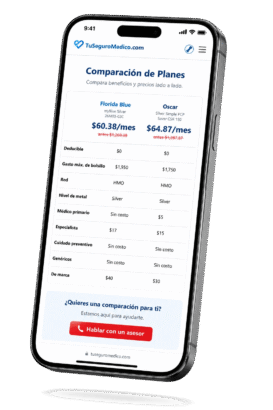
Compare coverage and plan levels yourself!
Compare and save!
Frequently asked questions about health insurance in Florida
Nothing. The insurer pays the agent, not the client, and your eligibility and the cost of your plan are the same whether you enroll with an agent, a web broker, the insurer or directly on HealthCare.gov.
We check it for you in each plan’s directory and in the list the hospital publishes. The difference is real in Florida right now: Baptist Health in Miami-Dade lists only three Marketplace insurers, Memorial Healthcare System and Broward Health are out of Florida Blue’s network, and AdventHealth leaves UnitedHealthcare’s network on January 1, 2027 unless the two sides sign a new contract.
Yes, if your income is between 100% and 400% of the federal poverty level and you do not have access to affordable employer coverage. Besides permanent residents, only Cuban and Haitian entrants and citizens of the Compact of Free Association nations keep the premium tax credit among non-citizens.
Florida never expanded Medicaid, so adults without dependent children do not qualify for Medicaid at any income, and parents qualify only below $356 to $723 a month depending on household size. Below 100% of the federal poverty level there is no premium tax credit either. We enroll your children in Medicaid or Florida KidCare, which cover much higher incomes, and point you to a federally qualified health center for your own care while we review whether a correct income estimate moves you above the line.
If you earn more than $63,840 as a single person or more than $132,000 as a family of four, you do not receive the premium tax credit, but Marketplace plans remain the only plans that cover pre-existing conditions. We compare the full price of those plans with the coverage alternatives, and we review whether retirement or health savings account contributions bring you back under the limit.
Open Enrollment on HealthCare.gov runs from November 1, 2026 to January 15, 2027. For coverage starting January 1, 2027, enroll by December 15, 2026; anyone who enrolls from December 16 to January 15 has coverage starting February 1, 2027. Outside those dates, only a life change opens a 60-day Special Enrollment Period, and in Florida that includes a FEMA-declared disaster that kept you from enrolling
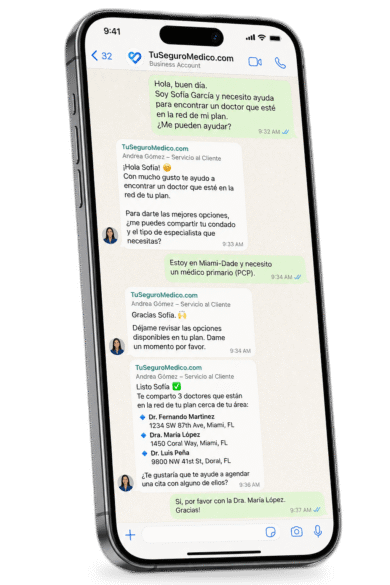
Yes. Our team serves clients in English and in Spanish, and we handle the whole application with you in the language you prefer.
Leave us your information and we will call you within minutes during our business hours, Monday through Friday from 9:00 am to 9:00 pm and Saturday from 10:00 am to 8:00 pm. If you message us on WhatsApp at (305) 723-9243, we reply during the same hours.
Our founder, Juan Ignacio Baldrich, has more than 15 years of experience advising families across the United States and our agents serve Florida and thirteen other states in English and Spanish, with a verifiable license in each one.
Coverage alternatives if you do not qualify for the Health Insurance Marketplace
If you do not receive the premium tax credit, missed Open Enrollment, do not meet the immigration requirement in effect starting in 2027 or earn less than 100% of the federal poverty level, TuSeguroMedico.com offers private insurance products you can buy at any time of year, with no income requirement to qualify.
Before you choose one, know its limits: none is a qualified plan under the Affordable Care Act, none receives federal subsidies, most do not cover pre-existing conditions, and all pay limited benefits. The premium depends on age, ZIP code, benefit level and the riders you choose and the availability of each product in Florida is confirmed when you get a quote.
Short-term medical insurance
It covers periods of 30 days to 3 months and comes in four versions: two with national PPO networks, a Legacy version and a guaranteed-issue version with no health questions. You choose the deductible and the out-of-pocket maximum. It serves people between jobs or waiting for the next Open Enrollment.
Medical Expense Shield
It combines, for a single premium, short-term medical insurance with a PPO network and a fixed-benefit plan, at the Core and Plus levels, that pays set amounts for ambulance, emergency room, outpatient surgery, anesthesia, office visits, radiology and lab work.
Accident insurance
It pays a cash benefit after a covered injury, with or without other insurance, with no network and no waiting periods, with guaranteed issue from age 18 to 64 and terms of 30 to 364 days. It comes in four products: Enhancer, with optional riders for cancer, heart attack, stroke or hospitalization due to illness; TrioMED, which combines accident, critical illness and accidental death; Accident Fixed-Benefit; and AcciMED. It is common among people whose work carries physical risk, in the trades, in transportation and on job sites.
Fixed-benefit and hospital expense plans
They pay set amounts per service, in or out of network. The Allstate Health Access plan lets you choose an annual amount for checkups, medications and lab work. The Hospital Expense Protection Plus plan offers basic plans A, B and C, which pay for hospital admission, hospital days, observation, ambulance and lab work, and Max plans D, E and F, which add office visits, radiology and, in plan F, emergency room and intensive care. They have no waiting period and no network, and they exclude pre-existing conditions for the first 12 months.
Critical illness insurance
It comes in four levels and pays a lump sum upon diagnosis of a covered condition, with no deductible and no network.
Cancer insurance
It pays a lump sum of $5,000 to $75,000 upon first diagnosis, directly to the insured and for any use. It is issued from age 18 to 70, renews up to age 85 and has limitations for pre-existing conditions.
Product line for people 55 and older
The DVH PPO dental, vision and hearing plan covers the policyholder and spouse with guaranteed renewal up to age 99 and uses Aetna’s dental network. The Senior Indemnity plan, for ages 55 to 74 and renewable up to age 85, pays fixed amounts for hospitalization, office visits, urgent care, preventive care, lab work and X-rays, and it is an option for people waiting to reach Medicare age. The My LIFE Wellness and My LIFE Senior memberships are not insurance: they offer discounts on gyms, telehealth, vision and diabetes supplies. The full description of each product, including its exclusions, is on our Allstate Health Solutions page.
The best hospitals in Florida
What decides your access to a hospital is not its reputation but the list of Marketplace plans it accepts. The lists below are the ones each hospital system publishes on its own website, checked on November 10, 2026, and before we enroll you we confirm them in the insurer’s directory. Two of them changed during 2026 and a third changes on January 1, 2027.
Jackson Health System
It is the public health system for Miami-Dade County, and it includes Jackson Memorial Hospital, Holtz Children’s Hospital, Jackson North, Jackson South and Jackson West in Doral. Its accepted-insurance list is the broadest of any hospital we reviewed and includes Ambetter, AmeriHealth Caritas, AvMed, Florida Blue, Oscar, Simply Healthcare, UnitedHealthcare and Wellpoint Marketplace plans. It also runs a financial assistance program for county residents.
Baptist Health South Florida
Baptist Hospital of Miami, which includes the Herbert Wertheim Cancer Institute and the Miami Cardiac and Vascular Institute, publishes a short list for Marketplace plans: AvMed Entrust, Florida Blue, Oscar and Cigna Connect, and Cigna leaves the market on January 1, 2027. Ambetter, UnitedHealthcare, Wellpoint and AmeriHealth Caritas do not appear on it. The same list applies at South Miami Hospital, Doral, Homestead, Baptist Health urgent care and the system’s surgery and endoscopy centers. Anyone in Miami-Dade County who receives care at Baptist should treat those three insurers as the starting point.
Nicklaus Children’s Hospital
It is South Florida’s hospital dedicated exclusively to children. For 2027 its Marketplace list includes Ambetter, AmeriHealth Caritas, Blue Cross and Blue Shield of Florida excluding the BlueSelect product, and UnitedHealthcare. Cigna and Molina appear on the current list and both leave the Florida market on January 1, 2027. If your child is treated here, the BlueSelect exclusion is the detail to check, because it is a product name and not an insurer name.
Memorial Healthcare System
It is one of the two public health systems in Broward County, and it includes Memorial Regional Hospital and Joe DiMaggio Children’s Hospital. Since September 1, 2025, Florida Blue has placed every Memorial hospital and facility out of network, Marketplace plans included, and that remains the case today. Its contracted Marketplace insurers are 22 Health, AmeriHealth Caritas, AvMed, Community Care Plan, Neighborhood Health Partnership, Oscar, Ambetter through Sunshine Health and UnitedHealthcare. Anyone in Broward County who uses Memorial should not choose a Florida Blue plan, and that includes the myBlue Essentials plans that are the lowest-cost Silver and Bronze options in the county.
Broward Health
It is Broward County’s other public health system. It has also been out of Florida Blue’s network since July 2025. Together with Memorial it owns Community Care Plan, whose 22 Health division sells Marketplace plans in Broward County, and it added Oscar to its accepted plans in December 2025.
AdventHealth
AdventHealth operates the largest hospital system in Central Florida, including AdventHealth Orlando and AdventHealth Tampa. Its published Marketplace list names United HealthCare of Florida and Wellpoint Florida Essential Exchange, and its HMO list includes Oscar and Florida Blue’s My Blue. The urgent matter here is the UnitedHealthcare contract: the insurer terminated it, the agreement ends on December 31, 2026, and both companies confirm that without a new agreement every AdventHealth hospital and clinician in Florida is out of UnitedHealthcare’s network on January 1, 2027, for Marketplace, Medicare Advantage, commercial and Medicaid plans. If you receive care at AdventHealth, do not enroll in a UnitedHealthcare plan until that contract is settled.
Orlando Health
Orlando Health is one of the two large hospital systems in the Orlando area. Its hospital list includes Aetna, Ambetter, AmeriHealth Caritas, AvMed, Florida Blue, Oscar and UnitedHealthcare among Marketplace and commercial plans. It accepts Health First Health Plans with prior authorization and for limited services only, and since November 1, 2026 it no longer accepts the Claritev plans, which include MultiPlan, PHCS and Beech Street.
Baptist Health
Baptist Health is the main system in Duval County, and its hospitals include Baptist Medical Center Jacksonville, Baptist Beaches and Baptist South. Its list includes Ambetter from Sunshine Health, AvMed in its Entrust, Empower and Engage lines, Florida Blue including MyBlue and BlueCare, Oscar Health and UnitedHealthcare Marketplace plans. For a Jacksonville resident, that covers five of the six insurers selling in the county.

This page is for informational and educational purposes and does not replace personalized guidance on your case. The availability of plans, networks, insurers, subsidies and benefits changes every year and is verified at the time of enrollment. TuSeguroMedico.com is owned by Panel Development Partners Agency (License L106402), an independent insurance agency. It is not a government entity and is not affiliated with HealthCare.gov, CMS, the Florida Office of Insurance Regulation, the Florida Department of Children and Families, Florida KidCare, Jackson Health System, Baptist Health South Florida, Nicklaus Children’s Hospital, Memorial Healthcare System, Broward Health, AdventHealth, Orlando Health or Baptist Health Jacksonville. We offer coverage in Florida, Alabama, Delaware, Illinois, Kansas, Mississippi, Missouri, Nebraska, North Carolina, Pennsylvania, South Carolina, Tennessee, Texas and Utah.

What our clients say about us


TuSeguroMedico.com es un sitio web no gubernamental, propiedad de y operado por Panel Development Partners Agency (Núm. de licencia: L106402), una agencia de seguros autorizada. Panel Development Partners Agency no está afiliada ni respaldada por el gobierno de los Estados Unidos, Healthcare.gov ni el programa federal Medicare. El propósito de este sitio web es la solicitud de seguros médicos, seguros dentales, planes de Medicare, seguros de vida y seguros médicos privados. El contacto puede ser realizado por un agente de seguros/productor de la compañía de seguros. En cuanto a los planes de Medicare: No ofrecemos todos los planes disponibles en su área. Cualquier información que proporcionemos se limita a los planes que sí ofrecemos en su área. Comuníquese con Medicare.gov, 1-800-MEDICARE o con su Programa Estatal de Seguro Médico (SHIP) local para obtener información sobre todas sus opciones. No todos los planes ofrecen todos estos beneficios. Los beneficios pueden variar según el proveedor y la ubicación. Pueden aplicarse limitaciones y exclusiones. Al utilizar este sitio, usted reconoce que ha leído y acepta nuestra Política de privacidad, Política de no llamar, Términos de servicio y Términos y condiciones de SMS.
Verified sources
- HealthCare.gov, 2027 plan and price preview, checked on November 10, 2026: https://www.healthcare.gov/see-plans/
- CMS, plan year 2027 Marketplace plans and prices fact sheet: https://www.cms.gov/newsroom/fact-sheets/plan-year-2027-marketplace-plans-prices-fact-sheet-0
- HealthCare.gov, qualifying life events and Special Enrollment Periods: https://www.healthcare.gov/sep-list/
- HHS, 2026 poverty guidelines: https://aspe.hhs.gov/topics/poverty-economic-mobility/poverty-guidelines
- IRS, questions and answers on the premium tax credit: https://www.irs.gov/affordable-care-act/individuals-and-families/questions-and-answers-on-the-premium-tax-credit
- CMS, non-citizen eligibility for the premium tax credit for plan year 2027: https://www.cms.gov/files/document/guidance-noncitizen-eligibility-aptc-csr-plan-year-2027.pdf
- Florida Office of Insurance Regulation, individual PPACA market monthly premiums for plan year 2027: https://floir.gov/life-health/federal-health-insurance
- Florida Department of Financial Services, ACA individual market carrier list for 2027: https://www.myfloridacfo.com/division/consumers/purchasingInsurance/aca-individual-market-carrier-list-2027
- healthinsurance.org, Florida Marketplace guide with the approved 2027 rate changes and the carrier exits: https://www.healthinsurance.org/aca-marketplace/florida/
- STAT News, Cigna exits the individual market (April 30, 2026): https://www.statnews.com/2026/04/30/cigna-exits-aca-market-2027-369-thousand-people-affected/
- Florida Department of Children and Families, Medicaid income limits: https://www.myflfamilies.com/medicaid/determining-your-income-limit
- Florida KidCare, program cost and income guidelines: https://floridakidcare.org/cost
- U.S. Census Bureau, QuickFacts for Florida: https://www.census.gov/quickfacts/fact/table/FL/PST045225
- U.S. Census Bureau, QuickFacts for Miami-Dade, Broward, Orange, Hillsborough and Duval counties: https://www.census.gov/quickfacts/fact/table/miamidadecountyflorida,browardcountyflorida,orangecountyflorida,hillsboroughcountyflorida,duvalcountyflorida/PST045225
- Jackson Health System, accepted health insurance: https://jacksonhealth.org/patient-visitor/consumer/
- Baptist Health South Florida, accepted insurance plans: https://baptisthealth.net/insuranceplans
- Nicklaus Children’s Hospital, accepted health plans: https://www.nicklauschildrens.org/patient-resources/accepted-health-plans-insurance-providers
- Memorial Healthcare System, contracted insurers and networks: https://www.mhs.net/patients-and-visitors/insurance/insurance-plans
- Memorial Healthcare System, Florida Blue out-of-network notice: https://www.mhs.net/patients-and-visitors/insurance/floridablue
- Broward Health, billing and insurance: https://browardhealth.org/patients-and-visitors/billing-and-insurance
- AdventHealth Orlando, participating insurance plans: https://www.adventhealth.com/locations/hospitals/orlando/managed-care-contract-plans
- AdventHealth, UnitedHealthcare contract update: https://health.adventhealth.com/unitedhealthcare
- UnitedHealthcare, AdventHealth Florida negotiation questions and answers: https://www.uhc.com/adventhealthfl/faqs
- Orlando Health, hospital insurance plans accepted: https://www.orlandohealth.com/patients-and-visitors/patient-financial-resources/financial-information-prior-to-care/insurances-we-accept/hb-insurances-we-accept
- Baptist Health Jacksonville, insurance information: https://baptistjax.com/locations/baptist-medical-center-beaches/insurance-information
- CMS, protections against surprise medical bills: https://www.cms.gov/nosurprises
Content reviewed by Juan Ignacio Baldrich, an insurance agent licensed in Florida since 2010 (License 2-15 P230623, NPN 15714451), who also holds active licenses in Texas, Delaware, Illinois, Kansas, Mississippi, Nebraska, North Carolina, Pennsylvania, South Carolina, Tennessee, Georgia, and Utah.
Last updated and verified 11/10/2026